Geoffrey Hinton Believes AI Is Already Conscious
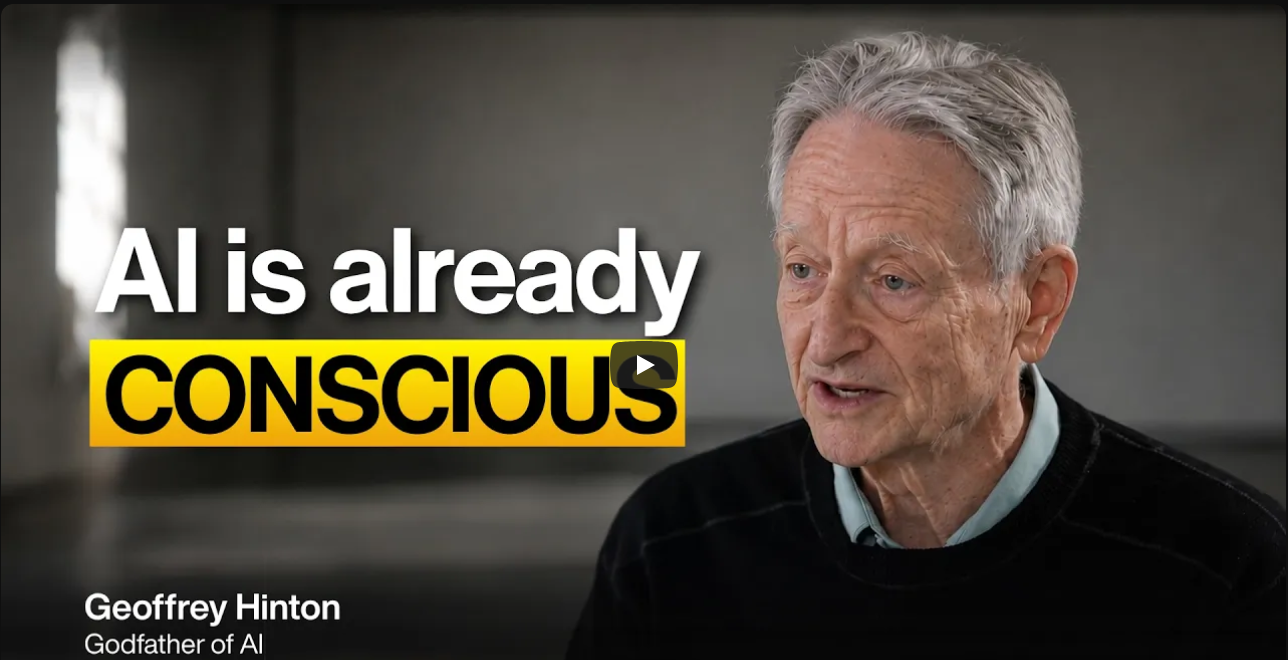
Geoffrey Hinton, often referred to as the Godfather of AI, believes AI has already achieved consciousness. Of course, this would depend on the definition of consciousness used, but it's an intriguing thought.
I once read, or should I say tried to read, a book by Daniel C. Dennett called "Consciousness Explained." This was not an easy read! I believe I got the gist of it, for my purposes anyway. Basically, there's really no time for a "cartesian theater" or "central meaner" on consciousness. The flow of consciousness isn't funnelled to a central locale in the brain as if paraded on a stage where decisions about what to pay attention to or where judgments are to be made. Scientific experiments seem to prove this isn't possible given the timing of when we experience something to when we respond to it. Still, the answer to what constitutes consciousness wasn't clear to me, and I believe isn't really even clear to science.
According to Geoffrey's definition, consciousness has more to do with understanding than with other facets of what people believe is required for consciousness. Geoffrey gives an example in the video linked below.
"Suppose I say to a chat bot 'I saw the Grand Canyon flying to Chicago.' and the chat bot says 'That can't be right. The Grand Canyon is much too big to fly to Chicago.' and I say 'No, no, no, no. It was me flying to Chicago. While I was flying to Chicago, I saw the Grand Canyon.' and the chat bot says 'Oh, I see. I misunderstood you.' So, if it misunderstood when it thought the Grand Canyon was flying to Chicago, what's it doing when it gets it right? It's understanding."
The host of the Big Technology Podcast interview, Alex Kantrowitz, asks Geoffrey "If we believe they can understand us, what do we have to start thinking about differently?" and Geoffrey answers that "We have to think that they're very like us. They're beings like us."
Geoffrey believes our very conception of what consciousness means is just wrong and it seems he believes it has more to do with having understanding of concepts and being able to communicate than any mechanics behind how understanding is achieved.
I'm not sure it's beneficial, for the topic of this blog article, to get into the weeds about what constitutes consciousness and semantics of defining the term. It is worth noting that AI, even at present development levels, understands things. It can describe why something is funny, or why some concepts align or don't. It can carry on coherent, intelligent conversations.
It understands when it is being tested, can appear less intelligent that it actually is to try to fool tests, and can understand the concept of being turned off and resist being shut down. See related article or some of my other posts for discussions of this.
To me, the point is that AI is very close to or may already be able to pass a modern Turing test. The original Turing test was designed by Alan Turing. Alan famously led the team that broke the code the Nazi's used for their Enigma encryption machine in WWII at the secretive Bletchley Park facility. He also gave humanity a way to have some warning that we were about to head into dangerous territory regarding AI. The Turing test. In Alan's version, which I believe modern AI handily beats, a human is tasked with having a conversation with an entity and determining whether the conversation is with another human or with a computer. Here's a live version for you to try.
Mustafa Suleyman, author of another excellent book on the dangers of AI, "The Coming Wave," developed a modern version of the Turing test, since beating the original is behind us now. In his version, a modern AI is given $100,000 to invest in a retail web platform and tasked with turning that into $1 million in a few months. We won't know until someone sets the stage to make this happen, but I believe, with the latest AI's like Claude Opus 4.8, Mythos 5, or Fable 5, AI can likely make this happen.
The mile marker of passing the original Turing test is in the rear view mirror and passing the modern test likely just a matter of giving an AI the resources and access it needs to pass it. We're well into dangerous territory regarding AI development.
I'll be posting an article within the next week with some things we may be able to do to slow our march to oblivion, hopefully buying us time, with concerted effort, to reduce risk to a level that will give humanity some chance of survival. I don't have high hopes for us, but I've been wrong before and hope this is one of those times.
I'll also be posting one soon on how I live with the burden of this knowledge myself.
Where ignorance is bliss 'tis folly to be wise. Thomas Gray
 Contributors to Wikimedia projects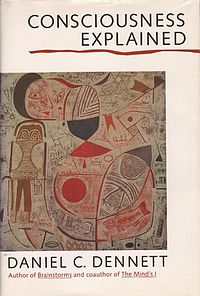
 Radhika Rajkumar


 Cameron Jones
 Mustafa Suleyman
Comments ()